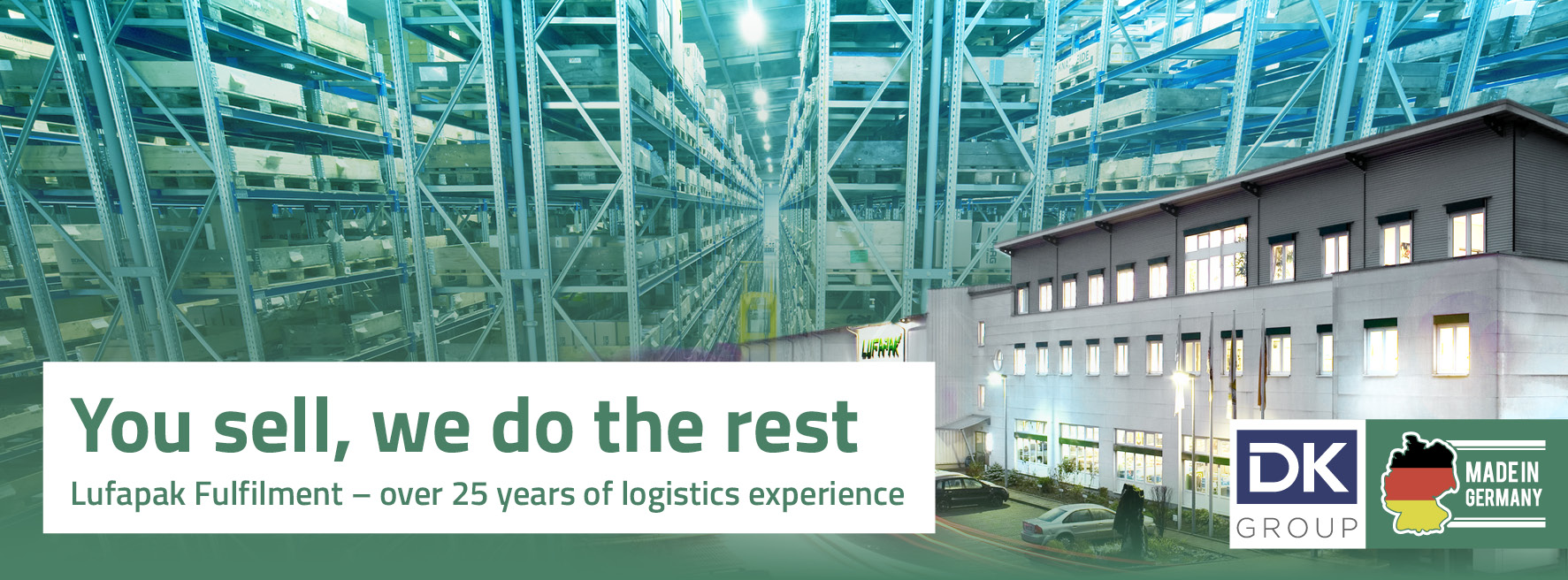



Let us advise you without any obligation and use the service around warehouse, dispatch and logistics
sales@lufapak.de +49 2631/384-0 Contactform
We encounter the term ‘retail’ every day, but its full meaning often remains unclear. As consumers, we interact continuously with various retail formats without realising the complex structures behind them. This form of trade has a significant impact on our shopping habits and influences the way products reach us.
Retail encompasses much more than the simple sale of goods. It is a complex system that links logistics, technology and customer service. Digitalisation in particular has fundamentally changed the requirements. Today’s customers expect seamless shopping experiences across different channels.
Understand the mechanisms of retail and recognise the challenges that retailers face every day. From procurement and storage to final delivery to the end consumer, every step requires precise coordination and strategic planning.
Retail refers in the narrower sense to the retail trade and describes all activities involved in the direct sale to end consumers. The English term has become established internationally and is used synonymously for various forms of trade. The word originally comes from the French ‘retailler’, which means ‘to cut up’ or ‘to divide into small pieces’.
This etymological origin illustrates the basic principle: large quantities of goods are divided into smaller, consumer-friendly units. Retail companies act as a link between manufacturers and end customers. They not only take care of the sales process, but also perform important functions such as product range design, pricing and customer service.
sales@lufapak.de +49 2631/384-0 Contactform

Retail is mainly distinguished from wholesale, which primarily supplies resellers. While wholesalers usually sell in larger quantities and at different conditions, the retail sector focuses on the individual needs of private households. This focus requires special skills in customer communication and product presentation.
Stationary retail locations continue to form the backbone of the German retail sector. These physical sales outlets enable direct customer contact and offer a hands-on product experience. Customers can examine, try on or test goods before purchasing them. This immediate experience builds trust and significantly reduces purchase risks.
Modern stationary retail concepts increasingly focus on the experience factor. Instead of simply presenting products, they create atmospheric shopping environments. The quality of advice, services and individual customer care are becoming decisive differentiating factors. Many retailers are investing in training their employees to ensure competent sales advice.
Location factors play a crucial role in the success of brick-and-mortar retail businesses. Footfall, accessibility and parking facilities have a significant impact on customer frequency. Successful retailers systematically analyse these factors and adapt their strategies accordingly. The integration of digital elements such as interactive displays or mobile payment options expands the possibilities of traditional shops.
Online retail has revolutionised the retail landscape and offers consumers unparalleled convenience. You can access extensive product ranges around the clock, without geographical restrictions. This flexibility is in line with modern lifestyles and increasing demands for convenience. Price comparisons are simplified and rating systems increase purchasing confidence.
Digital retail platforms use sophisticated algorithms to personalise the shopping experience. Based on your behaviour, you receive tailored product recommendations. This technology not only increases customer satisfaction but also the sales efficiency of providers. Artificial intelligence analyses purchasing patterns and continuously optimises the product range.
Logistical challenges are particularly prevalent in online retail. Fast delivery times, secure packaging and smooth returns processes are crucial for customer loyalty. Many providers are investing heavily in fulfilment centres and logistics networks. Same-day delivery and click-and-collect services are expanding the range of services and connecting digital and physical touchpoints.
Mobile commerce is fundamentally transforming shopping habits and making smartphones the primary shopping devices. Apps offer optimised user experiences with intuitive navigation and personalised content. Push notifications provide information about offers, delivery status or new product categories. This direct communication strengthens customer loyalty in the long term.
Location-based services open up completely new dimensions for mobile retail. Customers receive contextual offers based on their current location. Geo-fencing technology enables targeted advertising in the vicinity of stores. This local relevance significantly increases conversion rates and connects digital and brick-and-mortar retail experiences.
Social commerce is becoming increasingly important in the mobile environment. Social networks are integrating shopping functions directly into their platforms. Influencer marketing and user-generated content have a significant influence on purchasing decisions. This development is changing traditional marketing approaches and requires new strategies for retail companies.
Omnichannel strategies combine different retail channels into a coherent customer experience. Customers expect seamless transitions between online shops, apps and brick-and-mortar stores. Consistent prices, availability information and services across all touchpoints are becoming a basic requirement. This integration requires complex technical infrastructures.
Data consistency forms the foundation of successful omnichannel retail concepts. Customer data, inventory levels and transaction histories must be synchronised in real time. Enterprise resource planning systems coordinate these information flows and enable consistent customer service. This allows employees to provide expert advice and support regardless of the channel.
Cross-channel services such as ‘buy online, pick up in store’ or ‘reserve online, try in store’ create additional customer value. This flexibility meets individual preferences and significantly increases convenience. Successful omnichannel retailers continuously invest in optimising these processes and training their teams.
Retail logistics orchestrates the complex flow of goods from the manufacturer to the end consumer. This specialised discipline encompasses much more than just transport and storage. Order picking, quality control, packaging and distribution must be perfectly coordinated. Modern retail logistics uses automated systems and digital control tools for maximum efficiency.
Inventory management is one of the biggest challenges. Optimally coordinated inventory levels minimise capital commitment while guaranteeing availability. Forecasting systems analyse sales data, seasonality and trends to determine precise order quantities. Excessive inventory causes costs, while insufficient inventory leads to lost sales due to lack of availability.
Technological innovations are continuously revolutionising retail logistics. Robotic systems are taking over repetitive tasks in distribution centres. Artificial intelligence optimises route planning and delivery times. Internet of Things sensors monitor product quality and storage conditions in real time. This automation increases precision and significantly reduces operating costs.
Customer expectations have changed dramatically as a result of digital possibilities, putting retail companies under enormous pressure to adapt. Today’s consumers demand personalised shopping experiences that take their individual preferences into account. Standardised mass processing is no longer enough – customers expect tailor-made solutions and individual support. This personalisation requires comprehensive data analysis and intelligent systems.
Transparency is becoming a key success factor in modern retail. Customers want to be informed about product origin, delivery status and availability at all times. Real-time information across different channels is becoming a matter of course. Companies that cannot offer this transparency quickly lose credibility and customer loyalty.
The speed of response to customer enquiries and complaints is a key factor in customer satisfaction. Social media further increases this pressure, as dissatisfied customers share their experiences publicly. Proactive customer service and rapid problem solving are becoming critical competitive factors. Investing in service teams and the appropriate technologies pays off in the long term.
Delivery speed is becoming the primary differentiator in e-commerce retail. Same-day delivery and express options are no longer seen as a luxury by customers, but as standard. These expectations are forcing retailers to invest heavily in logistics infrastructure and warehouse networks. Regional distribution centres are moving closer to urban areas.
Availability guarantees are increasingly influencing purchasing decisions more than price differences. Customers prefer suppliers who reliably have the products they want in stock. Out-of-stock situations not only lead to lost sales, but also to permanent customer churn. Precise demand forecasts and flexible procurement strategies are therefore becoming vitally important.
Returns management presents retail companies with complex logistical challenges. Simple return processes increase willingness to buy, but incur significant costs. Intelligent systems for reducing returns through better product descriptions and size advice are becoming increasingly important. Efficient reconditioning of returned goods minimises financial losses.
Sustainability is fundamentally transforming the retail sector and increasingly influencing consumer decisions. Environmentally conscious consumers prefer companies with credible sustainability strategies. This development is forcing retailers to review their entire value chain. From product sourcing to packaging and transport routes, all aspects are being scrutinised.
Packaging optimisation is becoming a strategic task with direct customer perception. Excessive packaging is met with criticism, while innovative, environmentally friendly solutions generate positive attention. Recyclable materials, reusable packaging and minimalist design demonstrate environmental responsibility. These measures also reduce costs and improve the brand image.
Local sourcing is gaining relevance as a sustainability strategy. Short transport routes reduce CO2 emissions and support regional economic cycles. Customers appreciate the transparency of local supply chains and the feeling that they are supporting local producers. Retail companies are positioning themselves as responsible players in their communities through local partnerships.
Augmented reality will fundamentally change retail experiences and blur the boundaries between digital and physical shopping worlds. Customers will be able to place furniture virtually in their homes or try on clothes digitally. This technology will reduce return rates and significantly increase purchase confidence. Virtual showrooms will enable comprehensive product presentations without physical warehousing.
Voice-controlled commerce solutions are gaining importance thanks to the spread of intelligent assistants. Voice shopping simplifies reordering and enables hands-free shopping experiences. Conversational commerce uses natural language for product advice and purchase processing. These interfaces lower entry barriers and reach new target groups.
Blockchain technology increases transparency in retail supply chains and enables seamless traceability.
Customers can fully trace product origin, production conditions and transport routes. This transparency strengthens trust and justifies premium prices for sustainable products. Smart contracts automate payment processing and reduce transaction costs.
Artificial intelligence is becoming the central control unit of connected retail ecosystems. Autonomous systems make operational decisions based on real-time data and continuous learning. Predictive maintenance proactively prevents system failures, while dynamic price optimisation maximises margins. Human expertise is focused on strategic decisions and customer relationships.
The Internet of Things connects all retail components into an intelligent network. Smart shelves automatically report when items need to be restocked, while sensors analyse customer flows and optimise layouts. Connected products provide usage data for product improvements and service triggering. This connectivity creates new insights and optimisation opportunities.
Hyper-personalisation reaches completely new dimensions through advanced analytics. Individual customer preferences are recognised and taken into account in real time. Personalised prices, offers and recommendations create unique shopping experiences. This individualisation strengthens customer loyalty and justifies price premiums over standardised offerings.
Digital-first strategies prioritise digital channels as the primary points of customer interaction. Traditional retailers must fundamentally rethink their organisational structures and processes. Agile working methods, fast decision-making processes and a culture of continuous experimentation are becoming key success factors. Investments in digital skills and technologies are vital for survival.
Ecosystem partnerships give retail companies access to specialised skills without having to develop them in-house. Strategic alliances with technology providers, logistics service providers or fintech companies quickly expand service offerings. Platform business models integrate external partners and create comprehensive solution offerings.
Employee development is becoming a critical task, as traditional retail skills must be supplemented with digital skills. Continuous learning programmes prepare teams for changing requirements. New roles such as data scientists, UX designers and digital marketing specialists are expanding traditional organisational structures. Change management supports cultural transformation.
Retail is undergoing an unprecedented transformation that is fundamentally changing all aspects of commerce.
The boundaries between physical and digital shopping worlds are blurring, while customer expectations are constantly rising. Successful companies understand retail as a holistic ecosystem that seamlessly integrates technology, logistics and customer service. Technological innovations create new opportunities, but also require significant investment and adaptability. Artificial intelligence, automation and data analysis are becoming indispensable competitive factors.
At the same time, sustainability and social responsibility are becoming increasingly important factors in purchasing decisions.
The future of retail belongs to companies that successfully combine flexibility, innovation and customer focus. Continuous adaptation to changing market conditions is becoming a core competence. Invest in digital transformation, develop your teams and stay close to your customers – this is how you can position yourself successfully for the future of retail.