Fulfilment Germany, UK, European warehousing and fulfilment services. Part of the DK Group.



EU Battery Regulation 2026/2027 – What companies need to know now
Since February 2024, new rules apply across Europe for all players in the battery industry. The years 2025 and 2026, in particular, bring significant changes that directly affect manufacturers, distributors and logistics service providers. Here you will learn which obligations await you and how to prepare in time.
The New EU Battery Regulation Explained
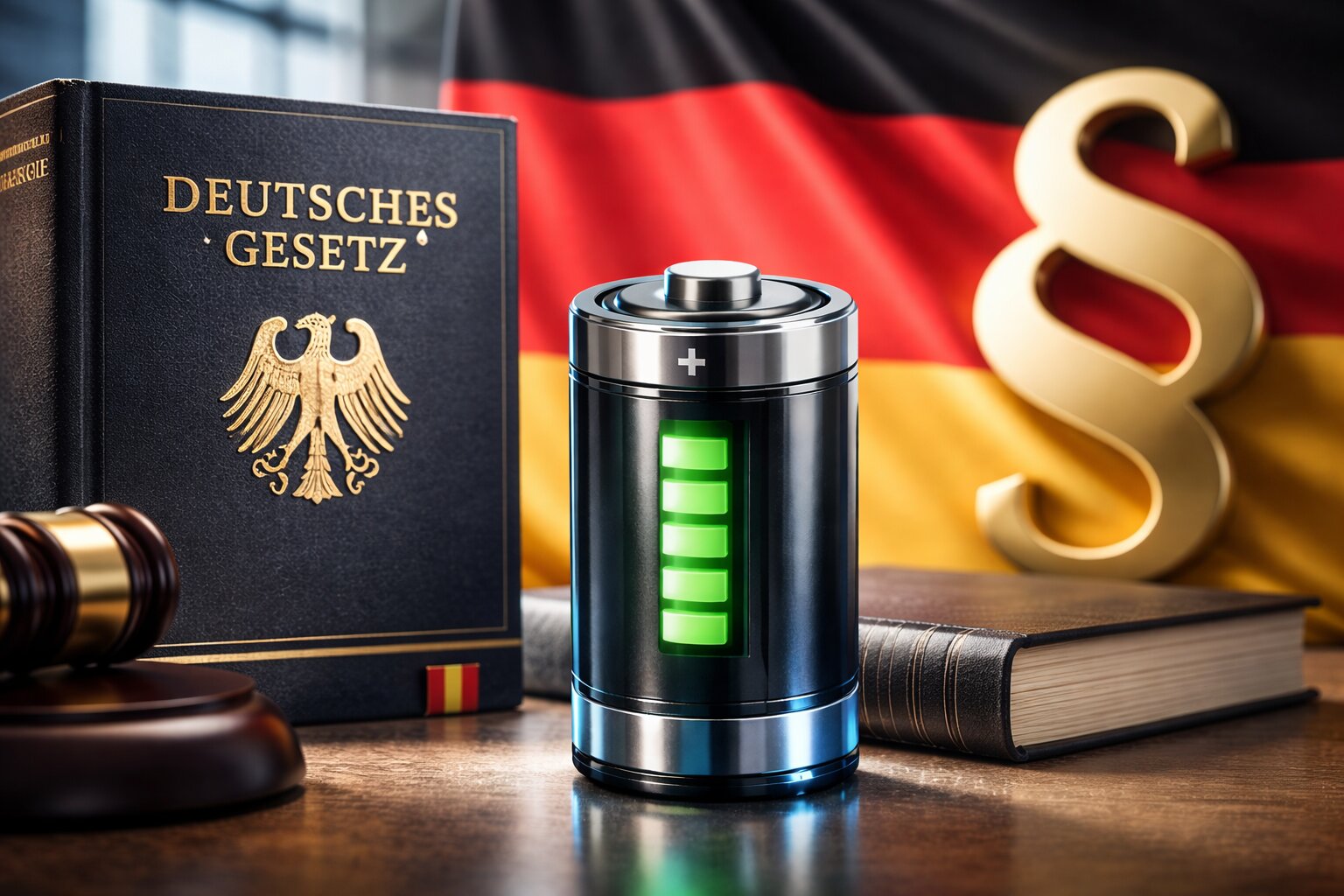
The EU Battery Regulation (Regulation 2023/1542) forms the central legal framework for the entire lifecycle of batteries within the European Union. Unlike the previous EU Battery Directive 2006/66/EC, this regulation applies directly in all member states without requiring national implementation. This creates uniform standards from Portugal to Finland under the new EU Battery Regulation.
The overarching goal is to make batteries more sustainable and strengthen the circular economy. In practical terms, this means greater transparency in manufacturing, higher recycling rates and strict requirements for raw materials used. The Batteries Regulation EU affects not only producers but the entire value chain.
For companies in Germany, the existing Battery Act will be replaced by the Battery Law Implementation Act. This transition occurs in stages and brings significant changes, particularly in 2025 and 2026. Those who act now will gain a clear competitive advantage over those who only react when deadlines have already passed.
Which Battery Categories Does the New EU Battery Directive Distinguish
The EU Battery Legislation introduces an expanded classification system that replaces the previous three-way division. Instead of distinguishing only between portable, industrial and automotive batteries, there are now five clearly defined categories. This reorganisation reflects technological developments, particularly the boom in electric mobility and light means of transport.
Each category is subject to specific requirements regarding labelling, take-back and recycling. Correct classification is therefore crucial for meeting all legal obligations. Companies should review their product portfolio promptly and reclassify if necessary.
The European Battery Directive thus creates clarity where grey areas previously existed. Especially with combined applications or novel battery technologies, the more precise categorisation helps avoid regulatory uncertainties.
The Five Categories at a Glance
| Category | Typical Applications | Key Features |
|---|---|---|
| Portable batteries | Smartphones, laptops, power tools | Collection target 73% by 2030 |
| Starter batteries | Vehicle starters, lighting | High lead content, strict recycling requirements |
| LMT batteries | E-bikes, e-scooters, segways | New category, collection target 51% by 2028 |
| Electric vehicle batteries | Electric vehicles, buses | Digital battery passport from 2027 |
| Industrial batteries | Energy storage, production facilities | CO₂ declaration from February 2026 |
Important 2025 Deadlines Under the EU Battery Regulation
The year 2025 marks a turning point in implementing the EU New Battery Regulation. Several central requirements come into force, with immediate effects on business processes. Careful preparation is essential to avoid sanctions and market access restrictions.
February 2025 – Carbon Footprint Becomes Mandatory
From 18 February 2025, manufacturers must disclose the carbon footprint of their batteries. This obligation initially applies to traction batteries in electric vehicles and covers all lifecycle phases. From raw material extraction through cell production to final assembly, every emission value is recorded and documented.
The calculation must follow standardised methods and be verified by an independent body. Additionally, results must be made publicly accessible. For companies, this means transparent supply chains and seamless data collection become competitive factors. Those who cannot prove their CO₂ balance risk losing market access.
August 2025 – Extended Producer Responsibility
18 August 2025 brings comprehensive changes to waste battery management. Chapter VIII of the New EU Battery Directive comes fully into force, establishing the principle of extended producer responsibility. Producers thus assume full responsibility for the entire lifecycle of their products.
At the same time, the labelling requirement with the separate collection symbol becomes mandatory. Every battery must visibly display this marking. Producer Responsibility Organisations receive their approval from this date and take on coordinating tasks for collection and recovery.
Important 2026 Deadlines Under the EU Battery Legislation
The year 2026 consistently continues the gradual tightening of requirements. Several deadlines fall within this period and affect different aspects of the Battery Regulation European Parliament adopted. Timely adjustment of internal processes is advisable.
January 2026 – Re-registration of All Manufacturers
By 15 January 2026, all battery manufacturers must re-register. The Battery Law Implementation Act requires a complete update considering the new categories. Existing registrations lose their validity on this date and will be deleted from the system.
From 16 January 2026, battery take-back in Germany is only possible through approved Producer Responsibility Organisations or approved individual take-back solutions. Companies without valid registration may no longer place batteries on the market. The deadline is binding and allows no room for delays.
August 2026 – Extended Labelling Requirements
From 18 August 2026, significantly more comprehensive labelling requirements apply. Batteries must carry detailed information on capacity, expected lifespan, chemical composition and correct disposal. This information must be displayed not only on the battery itself but also on the end device.
Additionally, classification into performance classes based on carbon footprint occurs. Consumers and commercial buyers can thus directly compare products and make informed purchasing decisions. The EU Battery Regulation thus creates transparency that was previously lacking.
The Digital Battery Passport from 2027
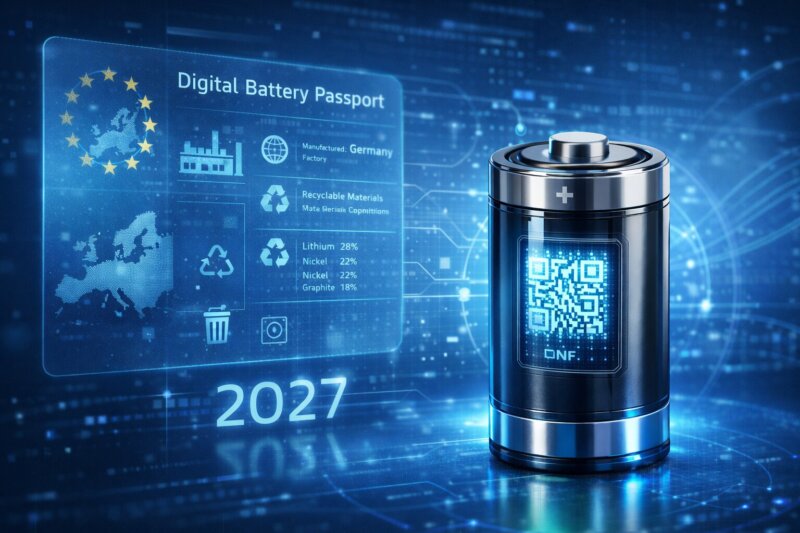
A central element of the Battery Passport EU Regulation is the digital battery passport, which becomes mandatory from February 2027. This electronic document links each individual battery with a comprehensive dataset and makes information accessible along the entire value chain.
Which Batteries Require a Battery Passport
The digital battery passport requirement applies to LMT batteries, industrial batteries with a capacity exceeding 2 kWh, and all traction batteries in electric vehicles. A QR code on the battery enables direct access to the stored dataset. Workshops, recycling companies and authorities thus receive relevant information without extensive research.
The technical requirements are demanding. All data must be available in interoperable formats and exchangeable via open networks. At the same time, role-based access rights protect sensitive business information from unauthorised viewing. Companies should prepare their IT infrastructure for these requirements early.
What Data Does the Battery Passport Contain
The digital battery passport documents both model-specific and individual battery information. This includes data on carbon footprint, recycled material content, durability and performance parameters, as well as test reports. The dataset is updated during repairs or ownership changes.
This transparency promotes trust in used batteries and facilitates their reuse or recycling. For logistics service providers, new requirements arise in handling and documentation, but also opportunities through specialised services around the battery passport.
Due Diligence Obligations in the Supply Chain
The EU Battery Regulation establishes strict due diligence obligations for companies with annual turnover exceeding 40 million euros. Originally planned for August 2025, application was postponed to 18 August 2027 through Regulation 2025/1561. This deadline extension gives affected companies additional preparation time.
What Do the Due Diligence Obligations Mean in Practice
Companies must systematically examine and document their supply chains for risks. The focus is on human rights violations, environmental damage and corruption in raw material extraction. Cobalt, lithium and nickel often come from regions with problematic mining conditions, which is why particular attention is required.
Independent risk management must be established and regularly verified by external auditors. Results flow into publicly accessible reports. Those who ignore these obligations risk not only fines but also significant reputational damage. The EU Commission is expected to publish practical application guidelines in July 2026.
What the EU Battery Regulation Means for Logistics and Fulfilment
Fulfilment and logistics service providers are affected by the Batteries Regulation EU in multiple ways. Storage, shipping and returns processing of battery-containing products are subject to specific requirements that go beyond previous standards. Process adjustments are unavoidable.
Stricter safety regulations apply to storage, particularly for EU Lithium Battery Regulations compliance. Fire protection concepts must be updated and employees trained accordingly. Shipping requires correct hazardous goods labelling and compliance with transport law provisions. Errors can lead to shipment rejections or liability claims.
Returns management gains complexity through extended producer responsibility. Returned batteries must be properly inspected, sorted and sent for prescribed recycling. Documentation obligations throughout the supply chain require continuous data collection. Experienced fulfilment partners support compliant processing and help minimise compliance risks.
Frequently Asked Questions About the EU Battery Regulation
What Does the EU Battery Regulation Govern?
The EU Battery Regulation sets binding standards for the manufacture, labelling, collection and recycling of batteries. It applies directly in all EU member states and replaces the previous Battery Directive EU. The aim is a more sustainable battery economy with higher recycling rates and transparent supply chains. Companies along the entire value chain are obliged to comply.
Which Deadlines Are Particularly Important in 2025 and 2026?
In February 2025, the CO₂ declaration requirement for traction batteries begins. From August 2025, extended producer responsibility applies. January 2026 brings the mandatory re-registration of all manufacturers. In August 2026, extended labelling requirements come into force. These deadlines require timely preparation and process adjustments.
Which Battery Categories Exist Under the New EU Battery Regulation?
The European Battery Directive distinguishes five categories: portable batteries, starter batteries, LMT batteries for light means of transport, electric vehicle batteries and industrial batteries. Each category is subject to specific requirements regarding labelling, take-back and recycling.
What Is the Digital Battery Passport?
From February 2027, certain batteries must have a digital battery passport. This electronic dataset contains information on origin, carbon footprint, material composition and performance parameters. A QR code on the battery enables access. The Battery Passport EU Regulation promotes transparency and facilitates recycling and reuse.
Does the EU Battery Regulation Also Affect Logistics Service Providers?
Fulfilment and logistics service providers are directly affected. They must comply with requirements for safe storage, correct labelling during shipping and proper returns processing. Documentation obligations require continuous data collection. Collaboration with experienced partners helps reliably meet regulatory requirements under the EU Battery Legislation.
Contact us now and get advice