Fulfilment Germany, UK, European warehousing and fulfilment services. Part of the DK Group.



Packaging goods – ensuring safe shipping
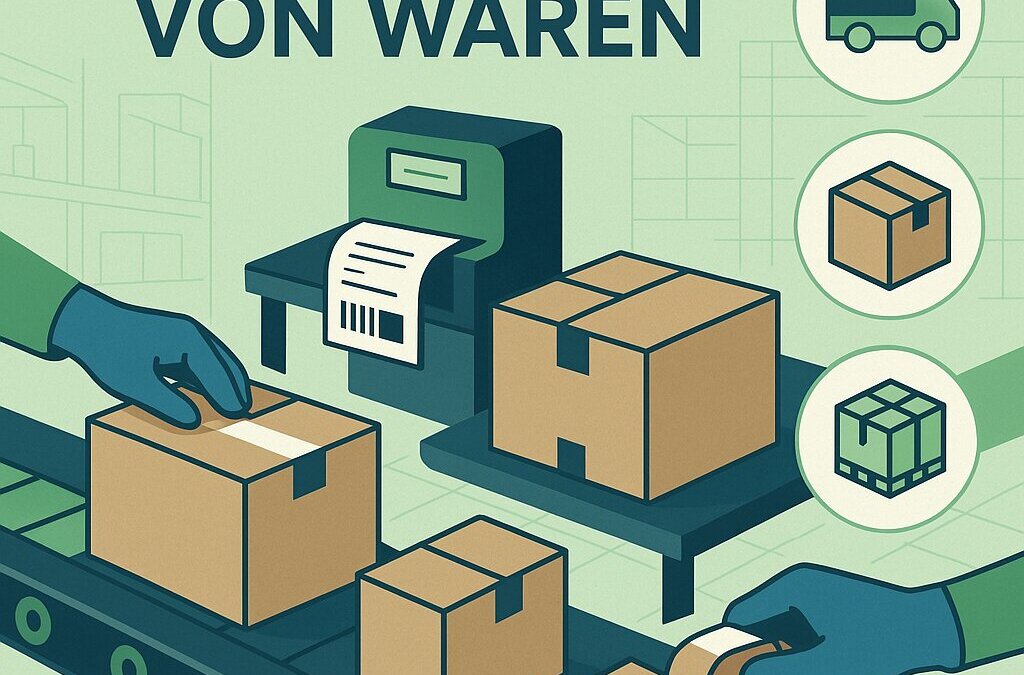
Getting products from A to B undamaged – this is a challenge familiar to both businesses and private individuals. Packaging goods is one of the fundamental processes in the logistics chain and plays a decisive role in ensuring that shipments reach their destination intact. Mechanical stress, weather conditions and the demands of modern transport systems require well-thought-out packaging solutions.
The entire process involves much more than simply placing products in a box. From the choice of materials and professional padding to secure sealing, every step contributes to the protection of the goods. Shipments pass through numerous stages on their way: conveyor belts, transhipment centres, various means of transport. This involves considerable forces due to stacking, acceleration and vibrations.
For shippers, professional work means a direct economic advantage. Damaged goods cause complaints, strain customer relationships and lead to additional costs for replacement deliveries. At the same time, ecological aspects are coming into focus: sustainable materials and resource-saving methods can be combined with effective product protection if the packaging strategy is chosen wisely.
What does ‘packaging goods’ mean?
The term describes a systematic process involving several interlinked steps. First, suitable containers must be selected that are appropriate for the type of goods, weight and transport route. The products are then positioned and secured with cushioning materials. The final step is to seal the packaging properly so that it remains intact throughout the entire transport chain.
Packaging fulfils several functions at the same time:
- Protective function: Protection against mechanical impacts such as shocks and pressure
- Safety function: Prevention of moisture damage and contamination
- Logistical function: Enabling efficient material flows in warehouses and transhipment centres
- Information function: Labelling with handling instructions and address information
Different types of goods require individual solutions. Fragile objects such as glass require intensive padding and sturdy outer walls. Heavy products require multi-wall cardboard or even wooden crates. Liquids must be sealed to prevent leakage, and temperature-sensitive goods need additional insulation.
Why is it important to package goods correctly?
Transport damage causes considerable losses to the economy every year. Inadequately secured shipments lead to complaints, returns and expensive replacement deliveries. These costs are a burden on both sides: shippers not only lose money, but also the trust of their customers. Professional packaging significantly minimises these risks and protects the value of the goods being transported.
Legal framework conditions play a role that should not be underestimated. Shipping service providers only accept liability for damage if the packaging complies with recognised standards. Inadequately secured goods can lead to claims for damages being rejected. Recipients should therefore check deliveries immediately upon receipt and photograph any damage. This documentation forms the basis for subsequent legal action.
Customer satisfaction depends directly on the condition of the delivered products. Damaged goods leave a negative impression and cause lasting damage to the company’s image. Professionally packaged shipments, on the other hand, signal quality awareness and reliability. Especially in the highly competitive e-commerce sector, the unpacking experience often determines follow-up orders, reviews and recommendations.
Choosing the right packaging
Corrugated cardboard boxes have established themselves as the standard solution, combining stability with comparatively low weight. For most applications, boxes with a wall thickness of at least 4 to 5 millimetres are suitable. The characteristic corrugated structure acts as a shock absorber and cushions external pressure.
- Goods weight Recommended corrugated cardboard properties
- Up to 5 kg Single-wall cardboard Sufficient for light goods
- 5-15 kg Double-wall cardboard Higher stability and cushioning
- Over 15 kg Triple-wall cardboard Maximum protection and load capacity
Dimensioning requires special care. The contents should fit into the box without being forced, but at the same time there must be about 5 centimetres of space for cushioning material. Overly generous packaging wastes material and unnecessarily increases shipping costs. Containers that are too small do not allow sufficient space for cushioning, which increases the risk of transport damage.
Used boxes can be reused under certain conditions. They must not show any visible damage such as tears, creases or damp spots. For heavy or valuable goods, you should always use unused material.
Packing goods securely: step by step
Preparation and planning
First, determine the exact specifications of your products: weight, dimensions and special characteristics such as sensitivity or fragility. This information determines the requirements for the container and filling material. Weigh the items individually and measure the longest, widest and highest points. Take into account any protrusions, corners or other exposed areas that require additional protection.
Calculate the required box size by adding about 10 centimetres to each product dimension. This allowance creates space for sufficient padding all around. If you have several items, plan their arrangement in advance: heavy items belong at the bottom, light items at the top. Position sensitive objects centrally with maximum distance from the walls.
Material checklist:
- Suitable box without previous damage
- Suitable padding material
- High-quality adhesive tape
- Marking materials and labels
Padding and securing
Filling materials fulfil two key tasks: they secure the goods in the box and absorb external shocks. The choice of material depends on the weight and sensitivity of the products. Bubble wrap or packaging chips are suitable for light goods, while heavy items require firmer padding such as machine-crushed packing paper. Avoid newspaper – it compresses heavily under pressure and loses its cushioning effect.
Start with an even layer of basic padding at the bottom of the box. Then arrange the products according to weight: heavy items at the bottom, light items at the top. This stabilises the centre of gravity and prevents the packaging from tipping over. Ensure that the weight is evenly distributed within the base area.
Important padding rules:
- At least 5 cm distance from all box walls
- Products must not touch each other
- Fill all cavities completely
- Insert padding firmly but without crushing
Closure and securing
High-quality adhesive tape with strong adhesive strength and tear resistance forms the basis for a secure closure. Cheap alternatives come loose during transport, which can lead to the packaging opening and damage. Only use special packaging tape that has been designed for shipping purposes.
Package weight Sealing technique Description
Up to 12 kg Simple seal One continuous strip across the bottom and lid
12-25 kg Double L seal Additional strips across the four shorter edges
Over 25 kg Double T seal With partial overlap of the vertical edges
Apply the adhesive tape evenly and without creases. Air bubbles or unevenness significantly reduce the adhesive strength. Do not use string or parcel cord – these get caught in automatic sorting systems. After sealing, attach the address labels correctly: recipient’s address at the bottom right, sender’s address at the top left on the same surface.
Special requirements for packing goods
Fragile products made of glass, porcelain or ceramics require multi-layer padding on all sides. The individual parts should not touch each other and should be at least 7 centimetres away from the cardboard wall. Wrap each fragile object individually in bubble wrap before placing it in the box. Clearly mark such shipments with the words ‘Caution: fragile’.
Special categories of goods:
- Liquids: Additional sealing in airtight bags, upright storage
- Electronics: Antistatic packaging material, protection against moisture
- Food: Temperature control, hygienic packaging materials
- Textiles: Protection against moisture and dirt, breathable materials
Climatic influences affect many types of goods during long-distance transport. Temperature fluctuations occur particularly in sea freight shipments when containers pass through different climate zones. Moisture-sensitive products require special protective films, under which condensation can form. Consider which solution is best for your specific goods.
Labelling and marking the packaging
Standardised pictograms inform everyone involved in the transport process about special handling requirements. The wine glass symbol indicates fragile goods, the umbrella warns of moisture sensitivity, and crossed-out stacked boxes signal ‘not stackable’. These internationally standardised symbols are understood worldwide and should be affixed to several sides of the packaging.
Address labels must be permanently adhesive and clearly legible. Print them on self-adhesive labels or use transparent pockets that protect against moisture and mechanical wear. Place the recipient’s address on a large area in the lower right-hand corner. Your sender details should be on the top left of the same page – this allows for easy returns if delivery fails.
Special indicators for valuable goods:
- Tilt indicators: colour change if stored incorrectly
- Shock indicators: registration of excessive vibrations
- Temperature indicators: documentation of limit value exceedances
Having goods packaged: when does it make sense?
Specialised service providers offer professional packaging solutions for demanding requirements. These companies have expertise, specialised materials and many years of experience with a wide variety of product categories. External expertise can be particularly useful for high-value, sensitive or unusually shaped goods.
Decision criteria:
- Shipping volume and frequency
- Complexity of packaging requirements
- Available internal resources and capacities
- Value of the goods to be shipped
- Risk of damage with in-house packaging
Compare different providers in terms of their range of services, pricing and reliability. Some service providers take care of the entire shipping process, including labelling and handover to carriers, which significantly reduces the workload for your logistics department. Clarify in the contract whether the service provider assumes liability for packaging damage. Clear regulations create security for both sides.
Environmental aspects of packaging goods
The German Packaging Act obliges shippers to minimise volume and mass. At the same time, packaging should be reusable or at least recyclable. These legal requirements promote the use of environmentally friendly materials and resource-saving concepts. Companies must regularly review their packaging strategies and adapt them to current requirements.
Reusable systems significantly reduce waste volumes and pay for themselves in the medium term. Sturdy plastic boxes or wooden crates can be used dozens of times before they need to be disposed of. Such systems are particularly well suited for regular deliveries between fixed partners. The higher purchase price is offset by reuse, and there are no disposal costs for disposable packaging.
Sustainable packaging options:
- Corrugated cardboard made from recycled paper
- Biodegradable cushioning chips
- Recycled filling material
- Reusable containers made of plastic or wood
Avoid common mistakes when packing goods
Incorrectly sized boxes are one of the most common mistakes in packaging practice. Oversized containers waste material and unnecessarily increase shipping costs, as many service providers charge based on volume. Boxes that are too small do not provide enough space for adequate padding and endanger the goods. Measure your products carefully and choose the appropriate size, taking into account the space required for filling material.
Typical packaging mistakes:
- Insufficient or incorrect padding
- Use of newspaper as filling material
- Inadequate closure with inferior adhesive tape
- Missing or incorrectly applied labels
- Direct contact of sensitive goods with cardboard walls
Invest in professional padding material that reliably fulfils its purpose. The additional costs are negligible compared to potential claims for damages and loss of image. Use sufficient high-quality adhesive tape and adapt the sealing technique to the weight. Affix all relevant information clearly visible in several places on the packaging.
Checklist: Packing goods correctly
Preparation:
- Determine the weight and dimensions of the goods
- Select a suitable box with sufficient stability
- Provide padding material, adhesive tape and labelling materials
Packaging process:
- Pad the bottom of the box evenly
- Place heavy items at the bottom and light items at the top
- Position fragile products in the centre of the box with maximum distance from the walls
- Fill all empty spaces completely with padding material
- Shake to test – nothing should slip
Sealing and shipping:
- Use sealing technology appropriate for the weight
- Attach address labels correctly
- Add any necessary warning symbols
- Document the packaging condition for valuable shipments
- Hand over the parcel to the carrier promptly
Conclusion
Professional packaging of goods requires care, knowledge and high-quality materials. Investing in professional packaging solutions pays off many times over in the form of lower damage rates and higher customer satisfaction. Consider the specific requirements of your products and adapt your concept accordingly. Regular reviews help to identify weaknesses and implement optimisations. Continuously train your employees in proper techniques so that every shipment meets the high standards of modern logistics and your goods arrive safely at their destination.
Contact us now and get advice